
About
A small pop-up
with a large garden.
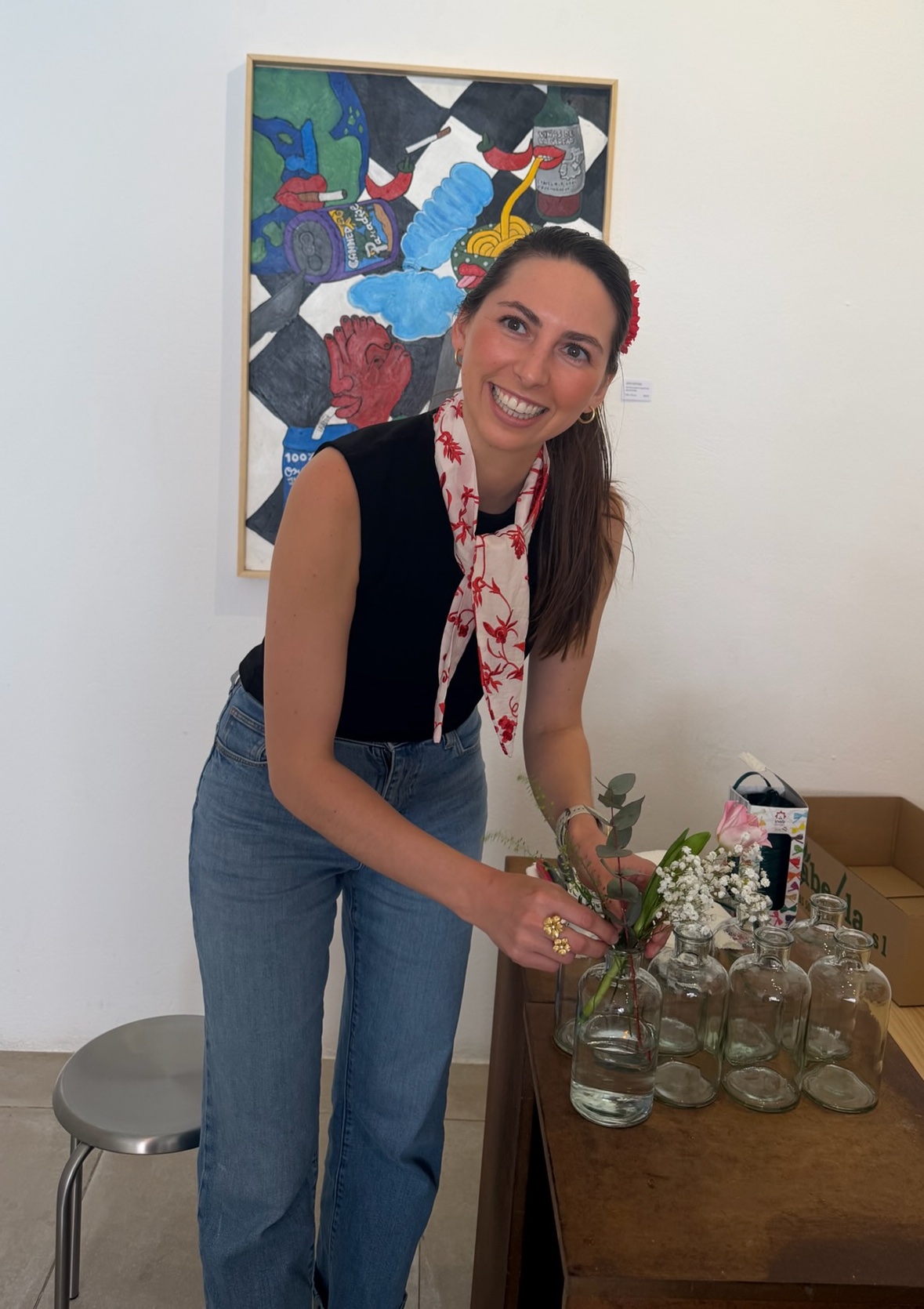
Our story
Founder Rahel Dana's international pop-ups are the ultimate collision of art, science, and floristry — a reflection of the world she grew up in.
Every flower arrangement is a small experiment: in colour, gesture, and the quiet drama of a single tulip about to drop a petal.
Beyond bouquets, the pop-up is a teaching space — a place to slow down, learn a craft, and leave with something beautiful in your hands.
Seasonal
Flowers grown close to the pop-up whenever possible, from European fields and growers.
Crafted
Every piece arranged by hand, never by formula.
Generous
We compost, we share, and we don't waste a stem.
Neuro-Aesthetics
FL/RESEARCH · Brief 03
Time spent with flowers is not leisure — it is neurological maintenance. Biophilia, the innate human affinity for living systems, has measurable effects on brain chemistry that modern life often suppresses.
Interacting with plants measurably lowers cortisol, the stress hormone that accumulates in overstimulated nervous systems. The simple act of touching a leaf or observing petal geometry shifts the body from sympathetic alert toward parasympathetic calm.
Color and symmetry trigger dopamine release through the brain's reward circuitry — not the short spike of a notification, but sustained, cumulative satisfaction. The deliberate, sequential nature of arranging demands focused attention without the pressure of performance, creating a state neurologists describe as "soft fascination."
In other words: flower arranging is a form of cognitive restoration. It gives your brain permission to stop optimizing, and simply observe.